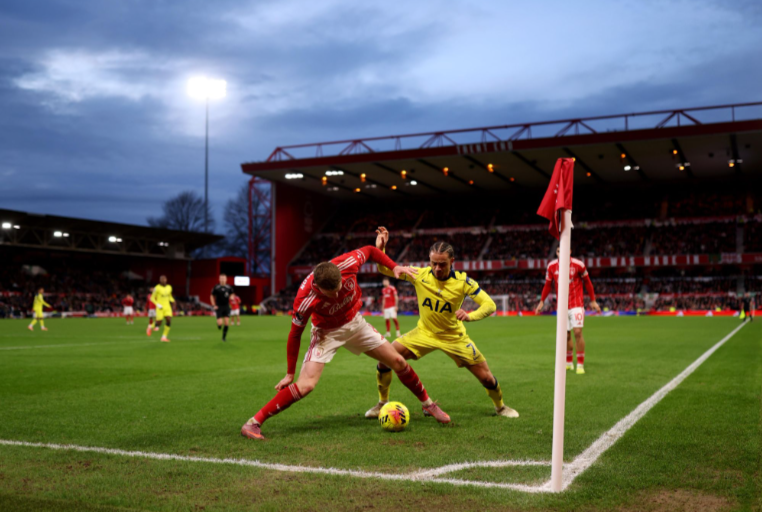
Corners are one of football’s most visible statistics.
A team attacks down the wing. A defender blocks the cross. The ball goes behind.
Corner.
Because corners happen frequently and are easy to count, it can be tempting to approach corner betting with a simple formula: find teams averaging plenty of corners and back another high total.
Football is rarely that straightforward.
Corner production is influenced by playing style, territory, crossing frequency, defensive behaviour, match state, opposition strength, and even how a particular game develops after the opening goal.
A team can dominate possession without producing many corners.
Another can have relatively little possession while repeatedly attacking wide areas and forcing defenders to clear the ball behind.
For bettors using AsianConnect88, understanding those differences can provide better context when evaluating supported corner markets through PS3838 or exchangestyle opportunities through OrbitX.
The important question is not simply:
How many corners does this team average?
A stronger question is:
Why does this team generate corners, and is the upcoming opponent likely to create the same conditions?
How Football Corner Betting Works
Corner markets can vary depending on the match and platform.
One of the most familiar is the total corners market, where bettors consider whether the combined number of corners will finish above or below a specified line.
Other markets may focus on individual team corners, corner handicaps, first half corners, or which team records more corners.
Market availability varies.
But regardless of the specific selection, the underlying analytical problem remains similar.
Bettors need to estimate how the two teams’ playing styles are likely to interact.
Start With How a Team Attacks
Corner statistics are more meaningful when bettors understand the football producing them.
Some teams naturally attack through wide areas.
Wingers attempt crosses.
Fullbacks overlap.
Attackers try to reach the byline.
Defenders are repeatedly forced to block crosses or clear the ball behind.
That style can naturally create corners.
Another team may prefer short combinations through central areas.
It might generate plenty of shots and possession without creating the same number of corner producing situations.
This is why two strong attacking teams can have very different corner profiles.
Possession Alone Does Not Predict Corners
A common assumption is that the team with more possession should also win the corner count.
Sometimes that happens.
But possession percentage does not show where the ball was controlled or how the team used it.
A club can hold 65% possession while circulating the ball between defenders and midfielders.
Another can have 45% possession but attack directly through wide channels whenever it recovers the ball.
The second team may create more corner situations despite seeing much less of the ball.
This is another reason bettors should look beyond headline possession statistics.
Our previous guide Five Football Statistics That Matter More Than Possession explores the broader problem of relying too heavily on one familiar statistic.
Territorial Pressure Is More Relevant
For corner analysis, attacking territory can often provide more useful context than possession alone.
A team spending long periods around the opponent’s penalty area naturally creates more opportunities for blocked crosses, deflected shots, and defensive clearances.
This doesn’t guarantee corners.
But it helps explain where they may come from.
Useful supporting indicators can include touches in the attacking third, penalty area entries, crosses, shots blocked, and sustained attacking sequences.
No single statistic needs to become a prediction.
The goal is to understand the pattern.
Crossing Frequency Can Be Important
Crosses are one of the most obvious ways corners are generated.
When teams repeatedly deliver the ball into crowded penalty areas, defenders frequently intercept or block those attempts.
But raw crossing numbers also require context.
A team launching hopeful crosses from deep positions is different from one repeatedly reaching the byline and forcing emergency defensive interventions.
Quality and location matter.
The upcoming opponent matters too.
Some defensive systems encourage opponents to play wide because they are comfortable defending crosses.
Others aggressively prevent wide progression.
Those tactical differences can influence corner totals.
Opponent Behaviour Is Half of the Equation
A team’s average corner count cannot be analysed in isolation.
Suppose Team A generates seven corners per match.
That number appears attractive.
But what if the upcoming opponent rarely allows teams to reach wide attacking areas?
Or perhaps Team B is comfortable conceding possession and defending deep, producing large numbers of blocked crosses.
Those are very different matchups.
Bettors should therefore examine both:
Corners generated by the attacking team
and
Corners conceded by the opponent.
When the two patterns align, the historical numbers become more meaningful.
Why Defensive Blocks Can Produce Corners
A deep defensive team can sometimes contribute to high opponent corner totals without attacking much itself.
Imagine an underdog protecting its penalty area against a stronger favourite.
The favourite dominates territory.
Crosses arrive repeatedly.
Shots are blocked.
Defenders clear the ball behind rather than attempting risky passes inside their own box.
That can create a steady flow of corners.
This means a one sided match does not automatically mean a poor totalcorners environment.
However, there is another possibility.
If the favourite scores early and controls possession without continuing to attack aggressively, corner production may slow.
Match state matters.
The First Goal Can Change Everything
Prematch corner analysis describes expected conditions at kickoff.
The scoreline can quickly change those conditions.
Suppose a heavy favourite scores after eight minutes.
It may become more patient.
The underdog may need to push higher.
The original tactical expectations change.
Now consider the opposite situation.
The underdog scores first.
The favourite may spend the next hour attacking continuously, potentially creating more shots, crosses, blocks, and corners.
This is why corner markets can be highly sensitive to match state.
A Losing Team Can Become a CornerGenerating Team
Teams chasing the score frequently take more risks.
Fullbacks advance.
More players enter attacking areas.
Crossing volume may increase.
Shots are attempted through crowded defensive structures.
That can create corners even if the team was relatively quiet earlier.
For live betting, understanding the relationship between scoreline and tactical behaviour can be particularly useful.
But bettors should avoid one dangerous shortcut:
A team being behind does not automatically mean corners will follow.
Some teams simply struggle to create pressure even when they need a goal.
Team Corners Can Tell a Different Story From Total Corners
Total corner markets combine both teams.
Teamcorner markets isolate one side.
That can make analysis more precise.
Suppose one club is expected to dominate territory while its opponent offers very little attacking threat.
A total corner position requires assumptions about both teams.
A teamcorners market focuses more directly on the expected dominant side.
Conversely, a match involving two aggressive wideattacking teams may make the combined environment more relevant.
The appropriate market depends on the opinion the bettor is trying to express.
Corner Handicaps Add Another Layer
Corner handicaps compare the number of corners generated by the two teams.
A strong favourite may be expected to dominate the corner count and therefore begin with a handicap.
This can be attractive conceptually when one team is expected to control territory.
But the same caution applies.
Match dominance does not guarantee corner dominance.
A clinical team might score from its first few opportunities and generate fewer corners than expected.
An inefficient attacking side may produce repeated blocked crosses and shots, generating many corners without scoring.
Football results and corner results do not always move together.
Finishing Efficiency Can Affect Corner Counts
This relationship is easy to overlook.
Imagine two teams creating identical attacking situations.
Team A converts its early opportunities into goals.
Team B repeatedly sees shots blocked or crosses cleared.
Team B may end up with more corners despite being less effective offensively.
Corners often occur when attacks almost succeed.
That makes them different from goals.
A team can play well and produce few corners because its attacks end efficiently.
Another can struggle to score while accumulating corner after corner.
Shots and Corners Need Context
More shots can sometimes support higher corner expectations.
But again, location and type matter.
Long range shots flying wide do little to generate corners.
Shots inside crowded penalty areas are more likely to be blocked or deflected.
This is why bettors should avoid treating every attacking statistic as equally relevant.
Corner analysis works best when the statistics describe how the team reaches attacking situations.
Home and Away Profiles Can Differ
Some teams become considerably more aggressive at home.
They push their defensive line higher, attack more frequently, and spend longer periods in advanced areas.
Away from home, the same team may become more conservative.
Corner averages can reflect this difference.
Rather than relying only on seasonlong averages, bettors can compare home and away performance when the sample is meaningful.
However, small samples should always be treated cautiously.
A handful of matches can produce extreme averages that are unlikely to continue.
Team News Can Change Corner Expectations
Injuries and rotation matter beyond the goals market.
Suppose a team loses its most effective winger.
That player may not be the leading scorer, but perhaps he is responsible for carrying the ball into wide attacking areas and creating crosses.
His absence could affect corner production.
The same applies to attacking fullbacks.
A replacement with a more defensive profile may change the entire shape of the team.
This is why team news should be interpreted tactically rather than simply counting missing players.
Fixture Congestion Can Affect Playing Style
Teams competing across domestic and European competitions may rotate heavily.
That can change attacking patterns.
A club accustomed to dominating through energetic overlapping runs may become less aggressive when key wide players are rested.
Fatigue can also affect pressing intensity and attacking movement.
Our guide How Fixture Congestion Can Affect Football Betting Decisions provides additional context for analysing teams during demanding schedules.
For corner bettors, the important question is whether rotation changes the mechanisms normally responsible for producing corners.
Weather and Pitch Conditions Can Matter—but Don’t Overreact
Poor weather can influence football.
Strong wind may affect crossing accuracy.
Heavy rain can alter passing and defensive control.
But these factors should usually remain secondary to team quality, tactics, and match context.
It is easy to create convincing stories around weather after seeing a forecast.
The challenge is determining whether those conditions meaningfully change the probability of the market.
Use environmental factors as context—not as an automatic betting signal.
Referees Are Usually Less Important for Corners Than Cards
Referee analysis receives considerable attention in football betting.
It is particularly relevant for disciplinary markets.
For corners, the referee usually has a less direct influence.
There can still be unusual circumstances, but bettors should be cautious about forcing referee statistics into every market.
A strong analytical process focuses on variables with a plausible relationship to the outcome being predicted.
For corners, team style and match state usually deserve greater attention.
Live Corner Betting Requires Watching the Match Properly
Live corner betting can be tempting because the count is constantly visible.
But the current number alone tells very little.
A match might have only one corner after 25 minutes while producing constant dangerous wide attacks.
Another might already have five corners generated from unusual sequences unlikely to continue.
The bettor needs to evaluate the process behind the count.
Are teams reaching the byline?
Are defenders repeatedly blocking crosses?
Is one side sustaining pressure?
Has the scoreline changed the tactical pattern?
These observations provide more information than simply extrapolating the current corner rate across 90 minutes.
Don’t Chase Corners Because the Match Is “Due”
This is one of the most dangerous livebetting assumptions.
If a match has produced only two corners after an hour, bettors may feel that more corners are somehow due because the prematch average was much higher.
Football does not work that way.
Historical averages describe previous matches.
They do not create an obligation for the current game to catch up.
If the tactical conditions are not producing corners, the low count may be completely justified.
Evaluate what is happening now.
Do not bet simply because the current number looks unusually low.
Early Corners Don’t Guarantee a High Final Total
The reverse mistake also occurs.
Four corners in the opening ten minutes can create the impression that the match is heading toward an enormous total.
Perhaps it is.
But early corners may have resulted from one intense spell.
A goal can then change the match completely.
Teams can adjust tactics.
The pace can fall.
Extrapolating a small period across an entire match is dangerous.
The same principle applies to many live football markets: rate is not destiny.
Compare the Market With Your Expected Match
A strong cornerbetting process should eventually produce a picture of how the match is expected to unfold.
Will one team dominate territory?
Will both attack through wide areas?
Is the underdog likely to defend deep?
Which team is more likely to chase the game if it falls behind?
Then compare that picture with the available market.
If the line already assumes an extremely high corner total, simply identifying a high corner matchup may not be enough.
Price and line determine whether the opportunity is attractive.
Using PS3838 for Football Corner Markets
Through AsianConnect88, users can access supported football markets through PS3838, including corner related markets where available for the relevant fixture.
Different competitions and matches may offer different lines and market depth.
Bettors should always confirm the exact settlement conditions before placing a wager.
Understanding the market is just as important as analysing the match.
Using OrbitX During Live Football
Match conditions can change rapidly.
A red card, early goal, injury, or tactical substitution can transform the territorial pattern.
Through OrbitX, AsianConnect88 users can explore supported exchangestyle football opportunities where available as market prices react to developments.
But changing odds are not an analytical substitute.
The bettor still needs to understand why the match has changed and whether that change is likely to continue influencing corner production.
External Research: Using PIWI247 for Corner Analysis
Corner research can benefit from combining statistical information with current match context.
PIWI247 can serve as a supplementary external research source for football coverage, match developments, team information, and betting related analysis.
Bettors can combine external coverage with current team news, tactical research, corner statistics, recent performance, and the supported markets available through AsianConnect88.
For time sensitive information such as injuries, rotation, and confirmed starting lineups, always verify that the information reflects the current fixture.
A Practical CornerBetting Checklist
Before considering a corner market, begin with playing style.
Determine how each team normally attacks and whether it relies heavily on wide areas.
Then examine the opponent.
Does the defensive system allow crosses? Does it defend deep? Does it concede significant territorial pressure?
Next, review relevant statistics such as corners generated and conceded, crossing activity, blocked shots, and attacking territory.
Add home and away context where appropriate.
Check team news.
Finally, consider the likely match state.
Which side is expected to control the game?
What happens tactically if the favourite scores first?
What happens if the underdog does?
Only after building that picture should the available corner line and price become the focus.
Conclusion
Football corner betting looks simple because corners are easy to count.
Predicting them requires considerably more context.
Historical averages can provide a useful starting point, but bettors should understand the playing styles that produced those averages.
Wide attacks, crossing frequency, territorial pressure, defensive behaviour, team news, scoreline, and tactical changes can all influence how many corners a match produces.
Possession alone is not enough.
Neither is recent corner frequency.
The strongest analysis asks why corners are being generated and whether the upcoming matchup is likely to reproduce the same conditions.
Through AsianConnect88, bettors can access supported corner markets through PS3838 and explore exchangestyle football opportunities through OrbitX, while resources such as PIWI247 can provide supplementary research.
Don’t simply count previous corners.
Understand where the next ones could come from.
Explore supported football markets through AsianConnect88 and analyse upcoming matches beyond the final score market.
Before evaluating corner lines through PS3838 or exchangestyle opportunities through OrbitX, study playing style, attacking territory, opposition behaviour, team news, and expected match conditions.
A corner statistic becomes more useful when you understand the football behind it.
Become an AsianConnect88 Affiliate
Sports publishers, football communities, betting websites, content creators, and other eligible online partners can also explore the AsianConnect88 Affiliate Program.
Eligible affiliates can complete the required registration and verification process, receive a unique referral code or tracking link, and introduce qualifying users through appropriate channels.
Affiliate commissions are based on qualifying referred member activity and remain subject to current eligibility requirements and program terms.
Visit the AsianConnect88 Affiliate Program to review the latest commission structure, registration requirements, payment conditions, and complete affiliate terms.
Disclaimer
This article is provided by AsianConnect88 for informational and educational purposes only and does not constitute betting, investment, or financial advice.
Football statistics, team news, starting lineups, corner lines, odds, and market availability may change. AsianConnect88 does not guarantee betting outcomes, winnings, profits, or the accuracy or completeness of information provided by third party sources.
PIWI247 and other external sources referenced in this article should be treated as supplementary research resources only. Readers should independently verify current match, team, and betting market information before making decisions.
Sports betting involves financial risk. Gamble responsibly, never wager more than you can afford to lose, and comply with all legal age requirements and gambling regulations applicable in your jurisdiction.
Participation in the AsianConnect88 Affiliate Program is subject to separate eligibility requirements, verification procedures, applicable laws, and current program terms.
Photo Credit: Nottingham Forest v Tottenham Hotspur Premier League
Frequently Asked Questions
What is corner betting in football?
Corner betting involves predicting outcomes related to the number or distribution of corner kicks in a football match. Available markets can include total corners, team corners, corner handicaps, and other variations depending on the event.
What causes a high number of corners?
Wide attacking play, frequent crosses, blocked shots, sustained territorial pressure, and deep defensive structures can all contribute to corner production. However, no individual factor guarantees a high total.
Does high possession mean more corners?
Not necessarily. Possession does not show where the ball is controlled or how a team attacks. A side can dominate possession while creating relatively few cornerproducing situations.
Are team corner averages useful?
Yes, but averages need context. Bettors should also examine opponent quality, corners conceded, playing style, home and away performance, team news, and the sample behind the average.
Does being behind increase a team's corners?
It can. Teams chasing a match may attack more aggressively and create additional crosses and blocked shots. However, some teams struggle to generate pressure even when losing.
Are early corners a reliable sign of a high total?
Not automatically. Several early corners may come from one short period of pressure. A goal or tactical adjustment can completely change the remainder of the match.
What should bettors watch during live corner betting?
Look for sustained territorial pressure, wide attacks, crosses, blocked attempts, tactical changes, and how the scoreline is influencing each team’s behaviour rather than relying only on the current corner count.