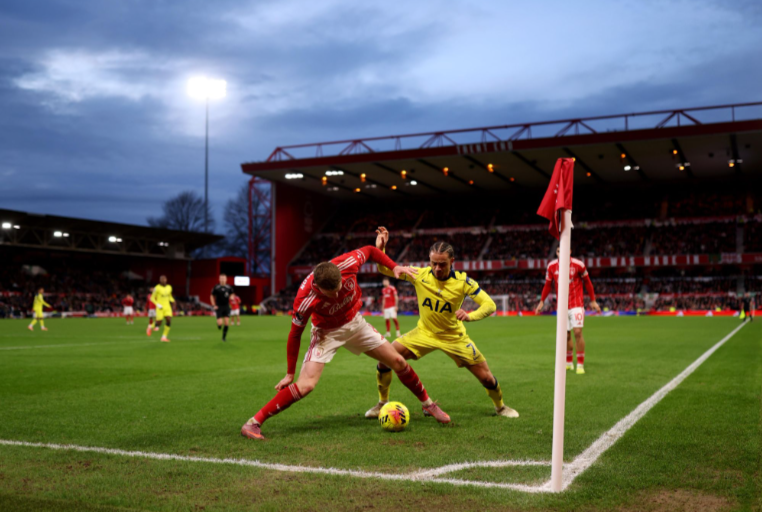
A few weeks into a new Premier League season, the table begins to look meaningful.
Some clubs are unexpectedly near the top. Others have started poorly. New signings are already being labelled successes or failures, while early tactical trends quickly become talking points among supporters, analysts, and bettors.
This is also one of the easiest periods of the season to overreact.
Three victories can make an average team look transformed. Two defeats can make a strong side appear to be in crisis. A striker scoring four goals from relatively few chances can suddenly look unstoppable, while another forward producing excellent opportunities without scoring may be dismissed as being out of form.
The problem is sample size.
Earlyseason football provides genuine information, but there is not yet enough of it to treat every emerging pattern as an established fact.
For bettors following the Premier League through AsianConnect88, the challenge is therefore not simply identifying early trends. It is deciding which trends are supported by meaningful changes in performance and which may disappear as more matches are played.
Supported Premier League markets can be explored through PS3838, while OrbitX provides exchangestyle opportunities where available. AsianConnect88’s Premier League Match Previews can also provide fixture specific context throughout the season.
Before considering the market, however, bettors need to separate signal from noise.
Why the Opening Weeks Are So Difficult to Analyse
The beginning of a football season combines several sources of uncertainty at once.
Teams have returned from different preseason schedules. Some managers are implementing new systems. Summer signings are adapting to new teammates and competitions. Injuries may already be affecting starting lineups, while the transfer window can leave squads unsettled during the first matches.
At the same time, analysts are working with extremely small samples.
If a club has played only five league matches, one unusually strong or weak performance represents 20% of its season data. A red card, penalty, goalkeeper error, or difficult away fixture can therefore distort the overall numbers far more than it would after 25 matches.
This doesn’t make earlyseason statistics useless.
It means they need more context than usual.
The League Table Matters but Not as Much as It Will Later
The Premier League table is the most visible measure of performance.
But early in the season, points and underlying quality can diverge considerably.
A team may have 12 points from five matches because it converted a very high percentage of its chances, benefited from favourable opposition, or won several close games.
Another may have six points despite creating more chances and allowing fewer dangerous opportunities.
Over time, the table becomes increasingly informative because more matches reduce the influence of individual unusual events.
In September, bettors should still respect the standings but avoid treating them as a complete ranking of current team quality.
Fixture Difficulty Can Completely Change the Picture
One of the first things bettors should check when evaluating early season form is who the team has actually played.
Suppose Club A has won four of its first five matches.
That looks excellent.
But imagine those victories came against promoted teams and clubs expected to finish in the bottom half.
Now compare that with Club B, which has only two victories but has already faced several Champions League level opponents.
The league table may suggest Club A is performing better.
The fixture context could tell a more complicated story.
Earlyseason strength of schedule matters because clubs have not yet faced anything close to the same set of opponents.
Expected Goals Can Help Identify Unsustainable Results
Expected Goals, or xG, can be useful during the opening weeks because it provides additional context around actual goals.
Consider a team that has scored ten goals from opportunities worth roughly five expected goals.
That does not mean the ten goals should be ignored.
Goals win matches.
But the difference may suggest that finishing has been unusually efficient.
If that level of conversion is difficult to sustain, future results may begin moving closer to the quality of opportunities being created.
The reverse can also happen.
A club might create strong chances repeatedly but score very few goals. Bettors who focus only on final results could interpret that as attacking weakness when the underlying process is actually encouraging.
This is why our guide Five Football Statistics That Matter More Than Possession is particularly useful during the early part of a season.
Don’t Treat xG as a Prediction Machine
Expected Goals are valuable, but they should not replace football analysis.
Different teams possess different finishers. Goalkeeper quality varies. Tactical systems influence where chances originate. Game state can also affect the type of opportunities created.
A team leading 3–0 may allow several late chances because the competitive intensity of the match has changed. Those chances still contribute to the opponent’s xG, but the context matters.
Use xG to ask better questions.
Do not use it as an automatic answer.
Tactical Changes Are One of the Strongest Early Signals
Some early season trends deserve more attention because there is a clear structural reason behind them.
A new manager may completely change how a team plays.
A club that previously defended deep could begin pressing aggressively.
Another may shift from attacking through wide areas to building centrally through midfield.
A fullback may now move into midfield during possession, while a winger who previously stayed wide may begin operating closer to the striker.
These are not random statistical fluctuations.
They are tactical changes that can influence future matches.
When early statistics align with an obvious change in structure, the trend becomes more interesting.
Watch What Has Changed, Not Just What Has Improved
Suppose a team conceded 60 goals last season but has allowed only two in its first five matches this season.
That improvement deserves attention.
But the bettor should ask why.
Has the manager changed the defensive system?
Did the club sign a stronger goalkeeper?
Is a new defensive midfielder protecting the centrebacks?
Has the team simply faced weak attacks?
Or have opponents created plenty of chances but failed to convert them?
Identifying the mechanism behind the improvement helps determine whether the trend has a reasonable chance of continuing.
New Signings Need More Than a Few Matches
The Premier League’s transfer market attracts enormous attention.
Expensive signings are expected to perform immediately, and early goals or assists can quickly influence public perception.
But adaptation is not always immediate.
A midfielder moving from another league may need time to adjust to the speed of Premier League pressing.
A striker could be learning completely different attacking movements.
A defender may be adapting to a higher defensive line.
For bettors, the important question is not simply whether a new signing has scored or assisted.
It is whether the player is changing the team’s underlying performance.
Some Transfers Change the Entire Team
Not every transfer should be analysed individually.
Certain players change the structure around them.
A creative midfielder who consistently breaks defensive lines may improve the opportunities available to several attackers.
A dominant defensive midfielder can allow fullbacks to advance more aggressively.
A fast centreback may enable the entire defensive line to play higher.
These effects may not appear immediately in goals or assists.
Yet they can influence multiple betting markets from match results and goals to corners and player related markets where available.
Early Goalscoring Streaks Require Context
One of the most visible early season trends is a striker beginning the campaign with several goals.
That can represent genuine improvement.
But bettors should examine how those goals were produced.
Is the player receiving more touches inside the penalty area?
Has the tactical system changed to create more chances for him?
Is he taking penalties?
Are his shot numbers increasing?
Or has he simply converted almost every opportunity?
A goalscoring streak supported by stronger chance creation is more informative than one based primarily on unusually efficient finishing.
The Same Applies to Goal Droughts
A striker failing to score in five matches may be described as being out of form.
But perhaps he has repeatedly created or received excellent opportunities.
Finishing can fluctuate.
If the underlying attacking process remains strong, the absence of goals does not automatically mean the player or team has become poor offensively.
This distinction matters particularly in goal markets.
Bettors should separate chance creation problems from finishing problems.
They are not the same thing.
Defensive Records Can Be Especially Misleading Early
Clean sheets attract attention.
A team keeping four clean sheets in five matches appears defensively excellent.
But clean sheet frequency alone does not reveal how well the team actually defended.
Perhaps opponents missed several major chances.
Maybe the goalkeeper produced exceptional saves.
Alternatively, the team may genuinely be preventing dangerous opportunities through excellent defensive organisation.
Look at the process.
Shots conceded, xG against, big chances allowed, penalty area entries, and goalkeeper workload can all add context.
A strong defensive record becomes more convincing when several indicators support it.
Goalkeeper Performance Can Distort Early Results
Goalkeepers can have an enormous influence on short term football results.
An outstanding goalkeeper can help a team outperform its defensive numbers for several matches.
A struggling goalkeeper can do the opposite.
This is particularly relevant early in the season because a small number of exceptional saves or mistakes can dramatically affect goals conceded.
When evaluating a surprising defensive trend, consider whether the goalkeeper is repeatedly rescuing the team or whether the defensive structure itself is limiting opportunities.
Promoted Teams Are Often Difficult to Price Early
Newly promoted clubs create another challenge.
Bettors know how they performed in the Championship, but Premier League competition presents a very different test.
Some promoted teams maintain an aggressive identity and adapt quickly.
Others discover that strategies effective in the second tier leave too much space against elite Premier League attackers.
The first several matches provide important evidence about whether the club can translate its previous style to the higher level.
But fixture difficulty remains crucial.
A promoted team facing several elite clubs immediately should not necessarily be judged the same way as one receiving a more manageable opening schedule.
Home Advantage Should Be Evaluated Team by Team
It is tempting to treat home advantage as a fixed Premier League effect.
In reality, some clubs benefit more than others.
Stadium atmosphere, pitch dimensions, tactical style, travel, and opponent behaviour can all contribute.
Earlyseason home records can provide clues, but a few matches are not enough to establish a reliable pattern.
Instead, combine the current season with longer term evidence while accounting for managerial and squad changes.
Beware of HeadtoHead Statistics From Previous Seasons
Head to head records are popular because they are easy to understand.
“Team A hasn’t beaten Team B in six matches” sounds significant.
Sometimes it is.
But Premier League teams change quickly.
Managers change.
Players leave.
Tactical systems evolve.
A match from three seasons ago may involve a completely different football environment.
Recent head to head meetings involving similar managers, players, and tactical structures can provide useful context.
Older results should usually receive much less weight.
The Transfer Window Can Distort August and Early September
Another complication is that early Premier League fixtures can occur while squads are still changing.
A player may start the opening matches and then leave.
A major signing can arrive after the season has already begun.
Managers may temporarily use players they know will not remain part of the long term starting eleven.
This makes the first few matches unusually fluid.
Once the transfer window closes and managers know the squad available to them, tactical patterns may become easier to interpret.
International Breaks Can Interrupt Momentum
September also brings another variable: international football.
Players travel across different countries and continents.
Some play heavy minutes.
Others return with minor injuries or fatigue.
Managers may have limited training time with their complete squad before the next Premier League fixture.
This doesn’t mean bettors should automatically oppose teams with many international players.
Elite clubs are accustomed to managing international schedules.
But the circumstances deserve attention, especially when combined with European competition.
European Competition Changes the Weekly Rhythm
Premier League clubs involved in the Champions League, Europa League, and other European competition begin facing more demanding schedules as autumn develops.
Managers must balance domestic and continental priorities.
Rotation becomes more important.
Recovery time becomes shorter.
A team’s impressive early Premier League form achieved while playing once per week may therefore face a new test once midweek European fixtures begin.
Our article How Fixture Congestion Can Affect Football Betting Decisions explains why schedule density should be incorporated into match analysis rather than treated as a minor detail.
Market Prices Also Adapt
Bettors are not the only people watching early season trends.
Markets adjust too.
If a previously underrated team performs extremely well for several weeks, bookmakers and market participants are likely to respond.
That means identifying a strong team is not enough.
The available odds still matter.
A club may continue playing excellent football while becoming less attractive from a betting perspective because its improvement is now fully reflected in the price.
This is where Value Betting Explained becomes relevant.
Good football analysis and good betting decisions are related—but they are not identical.
Public Narratives Can Move Faster Than Evidence
The Premier League generates enormous media coverage.
Every match creates narratives.
A manager is “under pressure.”
A striker is “unstoppable.”
A club is a “surprise contender.”
Another is supposedly “in crisis.”
Some narratives reflect genuine developments.
Others are amplified by the emotional nature of football coverage.
Bettors should distinguish between a compelling story and measurable change.
Ask whether the narrative is supported by tactical evidence, underlying statistics, and meaningful changes in personnel.
If not, it may simply be an earlyseason storyline.
Using PS3838 for Premier League Markets
Through AsianConnect88, users can access supported Premier League markets through PS3838.
Depending on the fixture, available markets may include match results, Asian Handicaps, goals, corners, and other football options.
Early season uncertainty makes disciplined research particularly important.
The goal should not be to bet on every apparent trend.
It should be to identify situations where your interpretation of the evidence differs meaningfully from the assumptions reflected in the market.
Using OrbitX as the Season Develops
Football expectations change rapidly during the opening months.
A team that entered the season with modest expectations may demonstrate genuine improvement.
Another may struggle with a tactical transition.
Through OrbitX, AsianConnect88 users can explore supported exchangestyle football opportunities where available as market expectations evolve.
Changing prices provide information about the market.
They do not prove that the market is correct or incorrect.
Bettors still need independent analysis.
External Research: Using PIWI247 for Premier League Analysis
Earlyseason research benefits from combining statistics with current information.
PIWI247 can serve as a supplementary external source for football coverage, team developments, match information, and betting related analysis.
Bettors can combine PIWI247 research with official club announcements, injury reports, tactical analysis, current statistics, and AsianConnect88’s Premier League Match Previews.
This is particularly important during September, when transfers, injuries, European competition, and international football can quickly change the context surrounding a team.
External sources should support independent research rather than replace it.
Which EarlySeason Trends Deserve More Attention?
The most useful trends usually have a clear football explanation behind them.
If a team is creating more highquality chances because a new tactical system consistently moves attackers into better positions, that deserves attention.
If defensive improvement coincides with a new goalkeeper, stronger midfield protection, fewer dangerous chances conceded, and a clear structural change, the trend becomes more credible.
Likewise, if a promoted team continues creating strong chances against several different levels of Premier League opposition, that information becomes more meaningful with each match.
The common theme is supporting evidence.
The statistics and the football should tell a similar story.
Which Trends Deserve More Caution?
Extreme finishing percentages should immediately encourage further investigation.
So should unusually high penalty frequency, exceptional goalkeeper performance, multiple narrow victories, or defensive records unsupported by underlying statistics.
These patterns can continue.
But bettors should be careful about assuming they represent a permanent change in team quality.
The same caution applies to league position after only a few matches.
Points are real.
But the process producing those points often provides more useful information about what could happen next.
A Better Way to Review Premier League Teams in September
Instead of ranking teams solely by their current league position, evaluate them through several layers.
Start with results.
Then examine fixture difficulty.
Look at chance creation and defensive performance.
Identify tactical changes.
Review major summer transfers.
Consider whether finishing or goalkeeping performance appears unusually extreme.
Finally, examine the upcoming schedule.
This approach creates a more complete picture than simply labelling clubs “in form” or “out of form.”
The objective is not to predict exactly where every team will finish.
It is to understand whether the current market perception of a team is supported by its actual football.
Conclusion
The opening weeks of the Premier League provide valuable information—but they also create some of the season’s easiest opportunities for overreaction.
League position, winning streaks, clean sheets, and goalscoring runs all matter.
None should be analysed without context.
Fixture difficulty, Expected Goals, tactical changes, new signings, goalkeeper performance, squad depth, and upcoming European schedules can reveal whether an early trend has structural support or may simply reflect short term variance.
The strongest earlyseason signals usually have an explanation.
Something has changed in the way the team plays, the players available, or the quality of opportunities being created and conceded.
Through AsianConnect88, users can follow supported Premier League markets through PS3838, explore exchangestyle opportunities through OrbitX, and use the Premier League Match Previews section for fixture specific research.
Don’t ignore early season trends.
Just make them prove themselves.
Follow the Premier League season with AsianConnect88 and explore our Premier League Match Previews for upcoming fixture analysis.
Access supported football markets through PS3838 and explore exchangestyle opportunities through OrbitX where available.
Before making your own betting decision, compare results with fixture difficulty, underlying statistics, tactical developments, current team news, and the available market price.
Become an AsianConnect88 Affiliate
If you operate a football website, sports community, betting platform, social audience, or other relevant online channel, you can also explore the AsianConnect88 Affiliate Program.
Eligible affiliates can complete registration and the required verification process, receive a unique referral code or tracking link, and introduce qualifying users through appropriate channels.
Affiliate commissions are based on qualifying referred member activity and remain subject to current eligibility requirements, commission conditions, and program terms.
Visit the AsianConnect88 Affiliate Program to review the current structure, registration requirements, payment conditions, and complete affiliate terms.
Disclaimer
This article is provided by AsianConnect88 for informational and educational purposes only. It does not constitute betting, investment, or financial advice.
Premier League results, statistics, injuries, transfers, team selections, odds, and available markets can change. AsianConnect88 does not guarantee betting outcomes, winnings, profits, or the accuracy or completeness of information supplied by third party sources.
PIWI247 and other external resources referenced in this article should be treated as supplementary research sources only. Readers should independently verify current football and betting market information before making decisions.
Sports betting involves financial risk. Gamble responsibly, never bet more than you can afford to lose, and comply with all legal age requirements and gambling regulations applicable in your jurisdiction.
Participation in the AsianConnect88 Affiliate Program is subject to separate eligibility requirements, verification procedures, current program terms, and applicable laws.
Photo Credits: Manchester City v West Ham United Premier League
Frequently Asked Questions
What is corner betting in football?
Corner betting involves predicting outcomes related to the number or distribution of corner kicks in a football match. Available markets can include total corners, team corners, corner handicaps, and other variations depending on the event.
What causes a high number of corners?
Wide attacking play, frequent crosses, blocked shots, sustained territorial pressure, and deep defensive structures can all contribute to corner production. However, no individual factor guarantees a high total.
Does high possession mean more corners?
Not necessarily. Possession does not show where the ball is controlled or how a team attacks. A side can dominate possession while creating relatively few cornerproducing situations.
Are team corner averages useful?
Yes, but averages need context. Bettors should also examine opponent quality, corners conceded, playing style, home and away performance, team news, and the sample behind the average.
Does being behind increase a team's corners?
It can. Teams chasing a match may attack more aggressively and create additional crosses and blocked shots. However, some teams struggle to generate pressure even when losing.
Are early corners a reliable sign of a high total?
Not automatically. Several early corners may come from one short period of pressure. A goal or tactical adjustment can completely change the remainder of the match.
What should bettors watch during live corner betting?
Look for sustained territorial pressure, wide attacks, crosses, blocked attempts, tactical changes, and how the scoreline is influencing each team’s behaviour rather than relying only on the current corner count.